Date locally. Stay in control.

Clear, local advice for checking profiles, protecting your privacy and meeting safely across Aberdeen and Aberdeenshire.

A profile says Portlethen, the photographs look convincing and the conversation feels easy. Then, just before you arrange coffee, the story shifts. They are suddenly offshore, unable to video call and dealing with a financial emergency. Is that simply awkward timing, or the start of a romance scam?

Online dating safety often comes down to noticing small contradictions before emotion explains them away. Most people you meet will be ordinary Aberdeen singles looking for much the same thing as you. Still, fake profiles, copied photographs, financial scams and intrusive behaviour do exist. A sensible safety routine lets you meet genuine people without treating every new conversation like a criminal investigation.

This guide covers the whole process, from creating a private profile to reporting suspicious behaviour. It is written for dating in Aberdeen and the surrounding commutable Shire, including Westhill, Portlethen, Inverurie and Ellon. Local distance matters. Someone who claims to live nearby should usually understand ordinary details such as travel times, neighbourhood names and the difference between being in Aberdeen and being somewhere much farther into Aberdeenshire.

What does safe online dating actually involve?

Safe online dating means controlling what you reveal, checking that a match is credible, keeping money out of the relationship and arranging early meetings in public.

No single check proves that a person is safe. Think of safety as several ordinary locks on the same door. A separate email address limits exposure. A brief video call checks that the face and voice broadly match the profile. A public meeting gives you an easy exit. Telling a friend where you are means somebody else knows the plan.

None of those steps is dramatic. Together, they are effective.

The aim is not to remove all uncertainty. It is to keep enough control that you can step back whenever something feels wrong.

Safe dating Aberdeen advice must also account for local working patterns. A fortnight offshore, an irregular hospital rota or frequent travel may be entirely genuine. The existence of a plausible explanation, however, does not prove a particular story. Listen for consistency. A real person with an awkward schedule can normally explain it plainly and will not use it to pressure you into sending money, documents or intimate images.

If your priority is a genuinely local pool, browse the site's guide to meeting singles in Aberdeen. Staying local will not remove every risk, but it makes practical checks and public meetings easier.

Protecting your identity and checking a match

Your first safety decisions happen before anyone sends a message. A dating profile needs enough character to start a conversation, but it does not need to function as a map to your home, workplace and daily routine.

How much personal information should you put on a dating profile?

Share your interests and general area, but leave out details that identify your home, workplace, routine, relatives or financial life.

Aberdeen can feel smaller than it looks. Mentioning your exact employer, specialist job title and neighbourhood may be enough for somebody to find your full name on a professional network. Add a photograph taken outside your home and the puzzle becomes easier still.

  • Use a general location. Saying Aberdeen, Westhill or Inverurie is usually enough at first; your street, development or regular bus stop is not.
  • Describe work broadly. Try engineering, education, healthcare or retail rather than naming the employer, building and shift.
  • Keep family details vague. You can say you have children without giving their names, schools, ages and weekly arrangements.
  • Review photographs carefully. Look for visible house numbers, car registrations, work passes, school uniforms, letters and recognisable views from your window.
  • Avoid routine clues. A prompt saying you run in Duthie Park is harmless enough; listing the exact mornings and time creates a timetable.

Consider using a separate email address for dating. Keep the username neutral rather than reusing one connected to your full name or public social accounts. Use a unique password and switch on two-factor authentication if the service offers it. That way, one leaked or guessed password does not open several accounts.

Privacy settings differ by service. Before paying, check whether you can hide your profile, block individual members and control who sees your photographs or activity status. If discretion around colleagues, family or an ex matters, do not assume an incognito setting exists. Read the actual controls first.

Practical check: search your profile username and run one of your dating photographs through a reverse-image search. If it quickly reveals your surname, employer or home address, change what you use before contacting anyone.

How can you verify dating profiles without becoming intrusive?

Verify dating profiles by checking consistency, using reverse-image search and having a short live video call before meeting.

Verification is not the same as demanding a passport. In fact, asking a stranger to send identity documents creates another privacy problem. Start with low-intrusion checks and judge the whole pattern rather than one isolated detail.

  1. Read the complete profile. Look for contradictions in age, location, work, family circumstances and what they say they want.
  2. Search the photographs. Reverse-image tools can reveal pictures copied from a public figure, stock library or another person's social account. No result is not proof of authenticity, but a clear mismatch matters.
  3. Ask ordinary local questions. Ask what side of town suits them for coffee or how they normally get into the centre. Avoid setting a quiz that tells them the answer you expect.
  4. Suggest a brief video call. Five or ten minutes is enough to establish that a live person broadly matches the photographs and conversation.
  5. Keep watching for consistency. Genuine people can be nervous, camera-shy or forgetful. Repeated contradictions and endless excuses deserve more weight.

A video call is useful, but not foolproof. Recorded footage, filters and increasingly convincing synthetic media mean you should still rely on several checks. During a live call, natural back-and-forth conversation is more useful than image quality. Ask a spontaneous, harmless question. You are looking for normal interaction, not collecting evidence.

There are innocent reasons someone may avoid video initially. They might share a home, have poor connectivity while offshore or simply hate being on camera. In reality, it depends on the person and circumstances. The catch is that a genuine boundary should not become permanent evasion. Offer alternatives, such as a voice call followed by a short public meeting in daylight.

What profile behaviour should make you slow down?

Slow down when somebody pushes for immediate intimacy, avoids simple verification or repeatedly gives explanations that cannot all be true.

One odd message proves little. Several linked warning signs are different. Be cautious if a person quickly moves the conversation away from the dating service, declares intense feelings before meeting, asks probing questions about savings or pressures you to keep the relationship secret.

Also notice how they respond to the word no. A respectful person may be disappointed that you will not share your number or meet that evening, but they will accept it. Anger, guilt, ridicule and persistence tell you something useful before the first date has even happened.
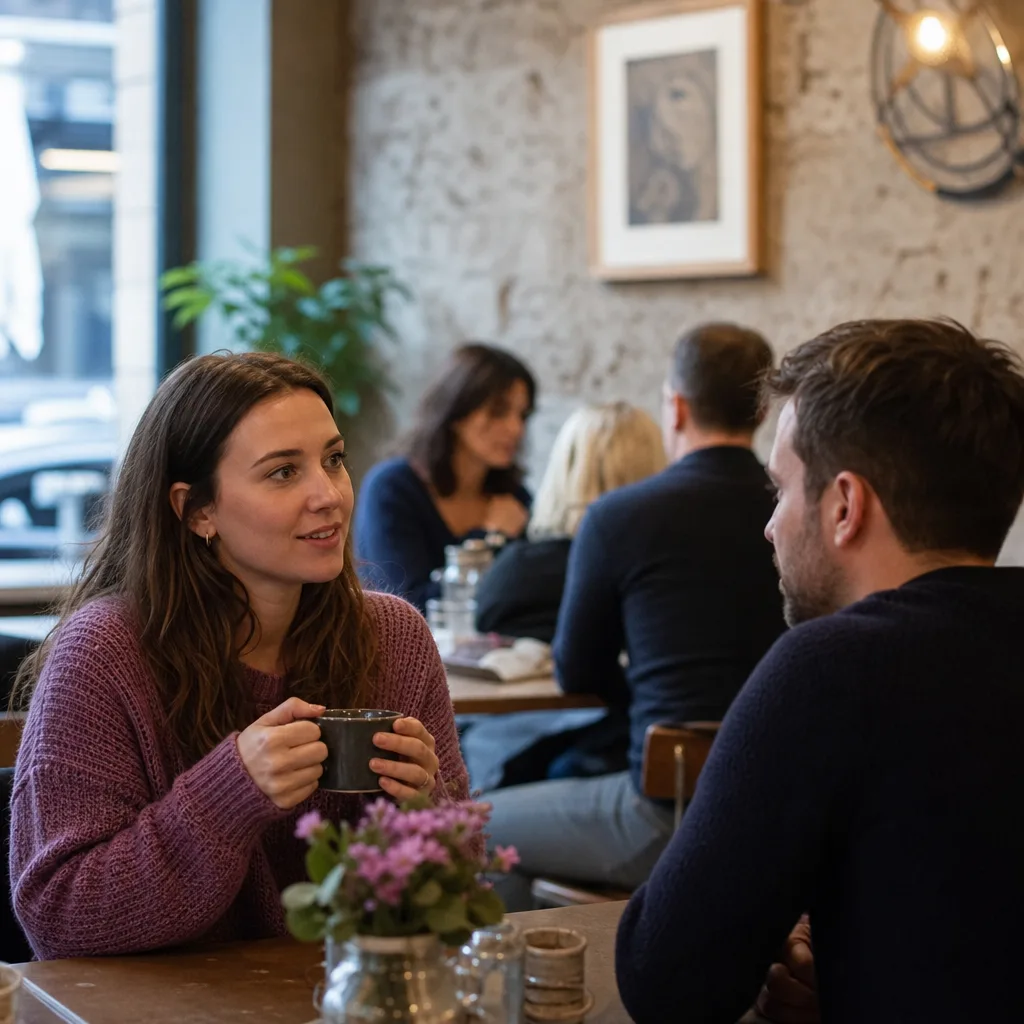
Person reviewing privacy settings on an online dating profile

Recognising romance scams before they take hold

Romance fraud rarely begins with an obvious request for cash. It begins with attention. The scammer builds a believable relationship, learns what matters to you and introduces a crisis only after refusing feels emotionally difficult.

What are the warning signs of romance scams in Aberdeen?

Common warning signs include rapid emotional commitment, continual reasons not to meet, inconsistent personal details and any request involving money or financial access.

The local setting can make a false story sound plausible. A scammer may claim to work offshore, travel internationally for energy projects or be temporarily stuck outside the UK. Those jobs and travel patterns are real. That is precisely why they make useful cover stories.

Do not decide solely on the occupation. Focus on behaviour. Does every suggested video call fail? Does a trip keep being extended? Does the person describe Aberdeen inaccurately while claiming years of local life? Most importantly, does the relationship lead towards money?

SituationReason to pauseSafer response
They need travel money to meetThe meeting depends on your paymentDo not pay; suggest meeting only when they can arrange it themselves
They offer an investment opportunityRomance is being used to establish financial trustDo not transfer funds or install investment software
They ask for gift cardsGift cards are difficult to recover once codes are sharedRefuse and preserve the messages
They want to use your bank accountYou could be drawn into moving stolen moneyDo not receive or forward funds for them
They request intimate imagesThe images may later be used for coercionStop, block and report any threat

Some requests are framed as temporary help: a delayed wage, customs charge, medical bill, broken phone or ticket home. Others sound like opportunities rather than emergencies. Cryptocurrency and foreign exchange schemes are common vehicles because the transfers can be hard to reverse and the dashboards shown to victims may be fake.

Never send money, gift-card codes, cryptocurrency, banking login details or one-time security codes to an online match. Do not move money through your account for somebody else, even if they say it is legal, urgent or needed to prove your trust.

Can a romance scammer really maintain a long conversation?

Yes, romance scammers may spend weeks or months building trust, and a detailed conversation does not prove that the identity behind it is genuine.

Many people imagine scams as badly written messages sent in a rush. Some are. Others are patient and organised. They may remember birthdays, send regular good-morning messages and discuss a future together. Parts of the story may be copied, while other replies are tailored to you.

Grammar is not a reliable test. Genuine local people make spelling mistakes, and scammers can write fluently. Nor is apparent vulnerability proof. A person who claims to be widowed, bereaved or let down in the past may be telling the truth, but those stories can also discourage questions by making scrutiny feel cruel.

Use emotional pace as a clue. Affection develops at different speeds, but certainty about a shared future before a live call or meeting is not evidence of compatibility. It can be a lever.

  • Pause the conversation. Urgency helps the scammer, not you.
  • Tell someone you trust. An outside view can spot contradictions that are hard to see when you are involved.
  • Keep the evidence. Save profile details, messages, email addresses, phone numbers, payment instructions and transaction records.
  • Contact your bank promptly. If money has moved, use a trusted number from your bank's website, app or card rather than a number supplied by the match.
  • Report the account. Give the dating service factual information so it can investigate.

There is no shame in being deceived. These crimes rely on ordinary human qualities: trust, hope, sympathy and the wish to help someone you care about. Silence only gives the offender more room.

Dating messages being checked for possible signs of a romance scam

Meeting safely and reporting serious concerns

A safe first meeting should be easy to reach, easy to leave and ordinary enough that neither person carries the weight of a grand occasion. Coffee often works better than a remote walk or a long dinner. Keep the first plan simple.

Where should Aberdeen singles meet for a safe first date?

Choose a familiar public place with other people around, reliable transport and a straightforward way to leave independently.

Aberdeen city centre offers practical choices because buses, taxis and busy public spaces are close together. Aberdeen Art Gallery on Schoolhill is a real, central meeting point and can work well for a daytime visit, subject to its current opening hours. Union Terrace Gardens is central too, but an outdoor meeting is less useful after dark or in poor weather. A café you already know may be the simplest option.

If one person lives in Ellon and the other in Portlethen, the fairest location may not be halfway on a map. Think about actual bus routes, last services, parking and whether either person would be stranded if the meeting ended early. The same applies across Aberdeenshire, where a short-looking distance can involve limited evening transport.

For more location ideas, see the local overview of dating in Aberdeen. Always confirm the venue's current hours directly before setting out.

What should you do before a first date?

Before a first date, confirm the person, share your plan with someone you trust, arrange your own travel and decide when you intend to leave.

  • Have a call first. A brief video or voice conversation reduces uncertainty and helps you judge whether the meeting still feels right.
  • Share the details. Tell a friend the person's profile name, the venue, the expected start time and when you will check in.
  • Take a screenshot. Profiles can disappear after a meeting; retain enough information for your safety contact to identify who you planned to see.
  • Control your transport. Travel independently and keep enough battery and money to get home without relying on your date.
  • Set a modest first plan. An hour over coffee is easier to extend than a full evening is to escape.
  • Keep your home private. Do not arrange collection from your address or accept a lift home merely to avoid seeming impolite.

Agree a check-in system with your friend. It can be as simple as a message after 30 minutes and another when you are safely heading home. A code phrase may help if you want them to call with an excuse, although you never need an excuse to leave.

Charge your phone, but do not treat location sharing as magic protection. It can fail through weak signal, a flat battery or incorrect settings. Clear information given to a reliable person is still valuable.

How do you stay safe during the meeting?

Stay in the agreed public setting, keep control of your drink and belongings, and leave immediately if boundaries are ignored.

Meet inside the venue rather than getting into a car first. Keep valuables with you. If alcohol is involved, watch your own intake and do not leave a drink unattended. These are precautions, not accusations.

A date may be disappointing without being dangerous. Awkward pauses, nerves and a lack of chemistry are normal. The more serious signs are controlling behaviour, anger when you disagree, attempts to isolate you, unwanted touching or pressure to change location. Someone insisting that you are rude for maintaining a boundary is giving you a reason to end the meeting.

Be direct if you can: “I am leaving now.” Move towards staff, a staffed reception or a busy area if you feel uneasy. Ask venue staff for help arranging transport or contacting police. If there is immediate danger or a crime is in progress, call 999. If you cannot safely speak on a mobile 999 call, follow the operator's prompts; the UK Silent Solution may involve pressing 55 when prompted.

Do not let concern about overreacting keep you somewhere unsafe. You can reconsider an awkward interaction tomorrow. You cannot recover the control you surrendered by accepting a lift, entering a home or moving to an isolated location against your judgement.

How should suspicious or abusive behaviour be reported in Scotland?

Report the account to the dating service, preserve the evidence and contact Police Scotland when fraud, threats, stalking, assault or other criminal behaviour may be involved.

Start by saving evidence before blocking the account. Take screenshots showing the profile, dates, messages and payment requests. Keep emails, usernames, phone numbers, web addresses, bank references and image files. Write a short timeline while the sequence is fresh.

Use the dating service's reporting tool as well as blocking. A block protects your own inbox; a report gives the operator information it may use to investigate the account. State what happened plainly. “Asked me to send £500 in gift cards after refusing three video calls” is more useful than “seemed fake”.

For non-emergency crime in Scotland, contact Police Scotland on 101 or use the reporting routes listed on its official website. Call 999 when somebody is in immediate danger or a crime is happening now. Fraud-reporting arrangements differ across the UK, so Aberdeen and Aberdeenshire residents should follow Police Scotland guidance rather than assuming an England and Wales process applies.

If you have transferred money, contact your bank immediately through an official channel. Speed can matter, although recovery is never guaranteed. Change compromised passwords from a safe device and tell the bank if you disclosed security codes or installed remote-access software.

Threats to share intimate images are abuse. Do not pay and do not send more material in the hope of stopping publication. Preserve the threat, report the account and seek police advice. Adults in the UK can also contact the Revenge Porn Helpline for specialist support. If you are worried that an image may have been created or altered without consent, explain that clearly when seeking help.

After any frightening meeting, get somewhere safe and contact a person you trust. Medical help may be appropriate even when you are undecided about reporting to police. Your immediate safety and wellbeing come first.

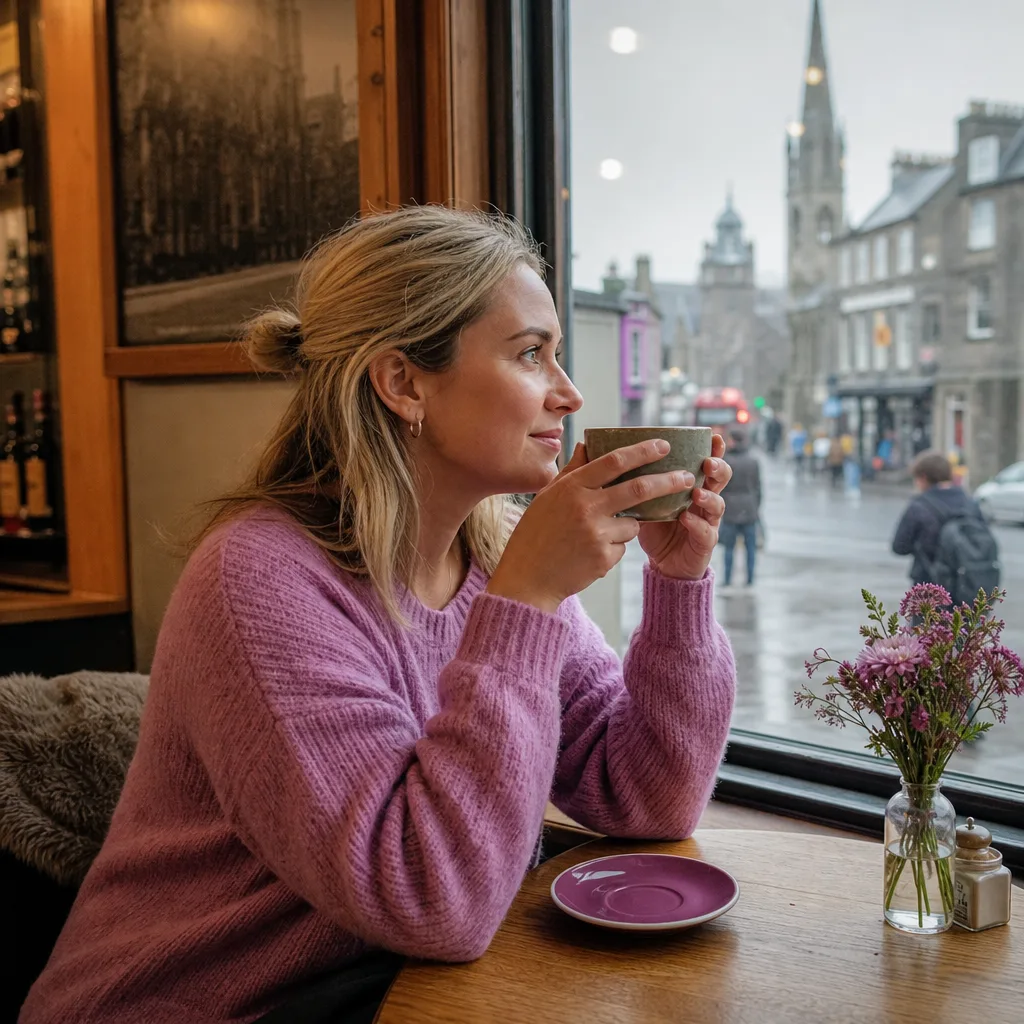
Daytime meeting outside Aberdeen Art Gallery on Schoolhill

Good online dating safety is mostly quiet preparation. Use a private profile, keep early conversations on the service, check that the person is consistent and arrange the first meeting on your own terms. Then pay attention to how they respond to reasonable boundaries.

What is the simplest safe-dating rule to remember?

Keep control of your information, money, transport and pace until trust has been earned through consistent real-world behaviour.

That principle works whether you are in your twenties and new to Aberdeen, dating again after a long relationship or fitting conversations around an offshore rota. Confidence with technology is not the same as immunity from manipulation, and being out of practice does not make you incapable of making sound decisions.

Take your time. A genuine match will not need your bank details, resent a public meeting or punish you for checking in with a friend. If a person disappears because you asked for a short video call or declined a lift home, the safety measure did its job.

Local dating should make meeting easier, not reduce your standards. Browse singles near you, ask ordinary questions and move from messages to a sensible public meeting only when you are comfortable. Close enough to meet is useful. Safe enough to meet is essential.

Frequently asked questions

Is it safe to give an online match my phone number?

You do not need to give out your number immediately. Keep early messages on the dating service until the profile appears consistent and you feel comfortable. If you move to phone messaging, review what your profile photo, full name and account settings reveal. A secondary number can provide extra separation.

How do I know whether an Aberdeen dating profile is genuine?

No single check proves a profile is genuine. Look for consistent details, reverse-search photographs, ask ordinary local questions and suggest a short live video call. Refusal to verify, repeated contradictions and requests for money are strong reasons to stop contact.

Where do I report a romance scam in Aberdeen or Aberdeenshire?

Report the profile through the dating service and preserve messages, payment details and screenshots. Contact your bank immediately if money or account information has been shared. In Scotland, report non-emergency crime to Police Scotland on 101 or through its official reporting routes. Call 999 if there is immediate danger.

Meet local people without giving up control

Create a profile, keep your details private and get to know Aberdeen singles at your own pace.

Create a free profile